Introduction: The Biggest Risk in Business is Not Lack of Data — It’s Poor Decisions
Every business decision carries weight.
Whether it’s:
-
Hiring a new team
-
Expanding into a new market
-
Increasing spend
-
Managing cash flow
The outcome depends on one thing:
The quality of the decision
And the quality of decisions depends on:
The quality of insights
Here’s the paradox.
Most businesses today are not lacking data.
In fact, they have more data than ever:
-
Financial transactions
-
Customer behavior
-
Operational metrics
But despite all this data, decision-making is still:
-
Slow
-
Reactive
-
Uncertain
Why?
Because data alone is not enough.
What businesses need is intelligence
This is where AI-driven decision-making becomes a game changer.
The Traditional Decision-Making Model: Why It Falls Short
Let’s look at how decisions are typically made.
Step 1: Data Collection
Teams gather data from:
-
Accounting systems
-
Reports
-
Spreadsheets
Step 2: Analysis
Finance teams:
-
Clean data
-
Analyze trends
-
Prepare summaries
Step 3: Interpretation
Leadership reviews:
-
Reports
-
Insights
Step 4: Decision
Actions are taken based on:
-
Historical data
-
Assumptions
This process is:
-
Time-consuming
-
Manual
-
Limited
The Core Limitations
1. Decisions Based on Past Data
Traditional models focus on:
What already happened
But business success depends on:
What will happen
2. Delayed Insights
Reports are:
-
Weekly
-
Monthly
Decisions are delayed.
3. Human Bias
Analysis depends on:
-
Individual judgment
-
Limited perspectives
Decisions may not be optimal.
4. Limited Scenario Planning
Teams often evaluate:
-
One or two scenarios
Miss alternative opportunities.
5. Data Overload Without Clarity
Too much data leads to:
-
Confusion
-
Indecision
More data does not equal better decisions.
What is AI-Driven Decision-Making?
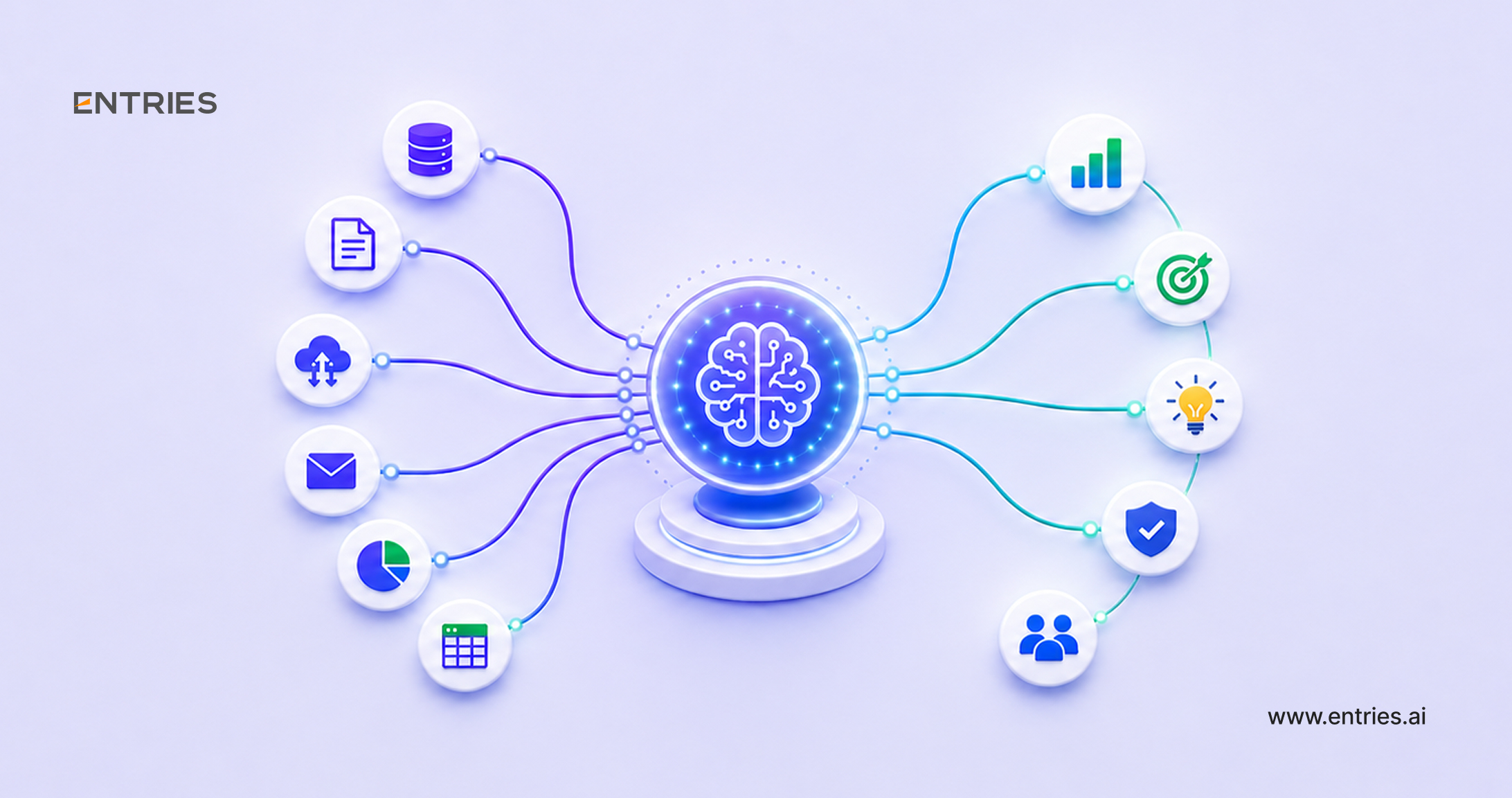
AI-driven decision-making uses:
-
Machine learning
-
Data analysis
-
Predictive models
to provide:
Actionable insights in real time
Instead of just showing data, AI:
-
Interprets it
-
Identifies patterns
-
Suggests outcomes
It transforms data into intelligence.
How AI Improves Decision-Making
1. Real-Time Insights
AI systems provide:
-
Live dashboards
-
Continuous updates
Decisions are based on current data, not outdated reports.
2. Predictive Analytics
AI can:
-
Forecast revenue
-
Predict expenses
-
Identify risks
CFOs and founders move from:
Reactive → Proactive
3. Scenario Planning
AI enables:
-
What-if analysis
-
Multiple simulations
Better strategic choices.
4. Pattern Recognition
AI identifies:
-
Trends
-
Anomalies
-
Opportunities
Insights that humans may miss.
5. Faster Decision Cycles
With automated insights:
-
Analysis time reduces
-
Decisions accelerate
Speed becomes a competitive advantage.
From Gut Feel to Data-Driven Decisions
Traditionally, many decisions relied on:
-
Experience
-
Intuition
-
Gut feeling
While valuable, this approach has limitations.
AI enhances decision-making by:
-
Validating intuition with data
-
Providing evidence-backed insights
The best decisions combine:
Human judgment + AI intelligence
Why AI Alone is Not Enough
Here’s an important reality:
AI provides insights, but it doesn’t execute decisions.
Businesses still need:
-
Context
-
Expertise
-
Execution capability
Without proper execution:
-
Insights remain unused
-
Opportunities are lost
This is where MSP plays a critical role.
AI + MSP: The Complete Decision Engine
The most effective model combines:
AI systems
Managed services
AI provides:
-
Data processing
-
Insights
-
Predictions
MSP provides:
-
Execution
-
Expertise
-
Continuous monitoring
Together:
They create a complete decision-making ecosystem
Entriesone: AI-Powered Decision Intelligence in Action
Entriesone brings decision-making to life by combining:
1. AI-Native ERP Platform (Entries AI)
All business data is captured in:
One unified system
Includes:
-
Accounting
-
Payroll
-
Compliance
-
Operations
Creates a strong data foundation.
2. Real-Time Dashboards
Founders and CFOs get:
-
Live financial data
-
Business performance insights
Instant visibility.
3. Predictive Analytics
AI enables:
-
Forecasting
-
Trend analysis
-
Risk detection
Better planning and strategy.
4. Managed Advisory Layer
A team that:
-
Interprets insights
-
Recommends actions
-
Supports execution
Ensures decisions are implemented effectively.
This creates:
One platform + AI intelligence + execution support
Real-World Example: Traditional vs AI Decision-Making
Traditional Approach
-
Monthly reports
-
Manual analysis
-
Reactive decisions
AI-Driven Approach (Entriesone)
-
Real-time insights
-
Predictive analytics
-
Faster decisions
The difference is clarity and speed.
Business Impact of AI Decision-Making
-
Faster Growth
Quick decisions drive momentum.
-
Better Financial Control
Visibility improves cost management.
-
Reduced Risk
Early detection prevents issues.
-
Increased Profitability
Optimized decisions improve margins.
-
Competitive Advantage
Businesses move faster than competitors.
Who Benefits Most from AI Decision-Making?
This is critical for:
-
Founders
-
CFOs
-
Finance teams
-
Growing businesses
If decisions matter, AI matters.
The Future: Autonomous Decision Systems
The next phase of business operations will be:
-
AI-driven
-
Real-time
-
Autonomous
Systems will:
-
Suggest actions
-
Highlight opportunities
-
Identify risks instantly
Decision-making will become:
Faster, smarter, and more precise
Conclusion: Better Decisions Drive Better Businesses
At the end of the day, business success depends on decisions.
AI transforms decision-making by:
-
Providing real-time insights
-
Enabling predictive analysis
-
Supporting strategic thinking
The shift is simple:
| From: |
To: |
| Data | Intelligence |
And when combined with execution:
It becomes a powerful growth engine.
Still relying on outdated reports and gut decisions?
It’s time to make smarter, faster decisions
Your AI-powered partner for accounting, payroll, compliance, and business intelligence.

Nagendra Raju
Co-founder of Entries.AI, leading the charge in building a unified business application that simplifies how SMBs operate today. Instead of juggling multiple-point solutions, SMBs can now rely on a single, seamless system that connects their entire workforce, operations, accounting, and finance functions.