Introduction: Why Financial Reporting Still Slows Down Businesses
Financial reporting is one of the most important outputs of any business.
It tells you:
-
How much you earned
-
What you spent
-
Where you stand financially
It drives:
-
Strategic decisions
-
Investor communication
-
Compliance reporting
Yet, despite its importance, financial reporting remains one of the slowest and most manual processes in many organizations.
Finance teams spend days — sometimes weeks — preparing reports.
They:
-
Collect data from multiple systems
-
Reconcile inconsistencies
-
Adjust entries
-
Validate numbers
And even after all this effort, the reports often reflect the past — not the present.
In a fast-moving business environment, delayed reporting is a major disadvantage.
The Traditional Reporting Process: Where Time is Lost
Let’s look at how financial reporting typically works.
|
|
Step 1: Data CollectionData is pulled from:
|
|
|
Step 2: Data ConsolidationFinance teams:
|
|
|
Step 3: ReconciliationTransactions are:
|
|
|
Step 4: Report PreparationReports are created:
|
|
|
Step 5: Validation
|
The Core Problem: Reporting is Manual and Reactive
The biggest issue is not the effort — it’s the approach.
Traditional reporting is:
-
Manual
-
Periodic
-
Backward-looking
By the time reports are ready:
The business has already moved forward.
Why Manual Reporting Fails Modern Businesses
1. Delayed Insights
Reports are available only after:
-
Data collection
-
Processing
-
Validation
Decisions are delayed.
2. High Risk of Errors
Manual processes increase:
-
Data inconsistencies
-
Calculation mistakes
-
Formatting issues
Accuracy becomes a concern.
3. Lack of Real-Time Visibility
Businesses cannot:
-
Track performance continuously
-
Identify issues early
They operate reactively.
4. Heavy Dependency on Finance Teams
Reporting depends on:
-
Skilled resources
-
Time availability
Scaling becomes difficult.
5. Limited Strategic Value
Finance teams spend more time:
-
Preparing reports
Instead of:
-
Analyzing them
Strategic value is reduced.
What is Financial Reporting Automation?
Financial reporting automation uses technology and AI to:
-
Generate reports automatically
-
Update data in real time
-
Eliminate manual effort
Instead of preparing reports manually:
The system generates them continuously.
How AI Transforms Financial Reporting
Financial reporting automation
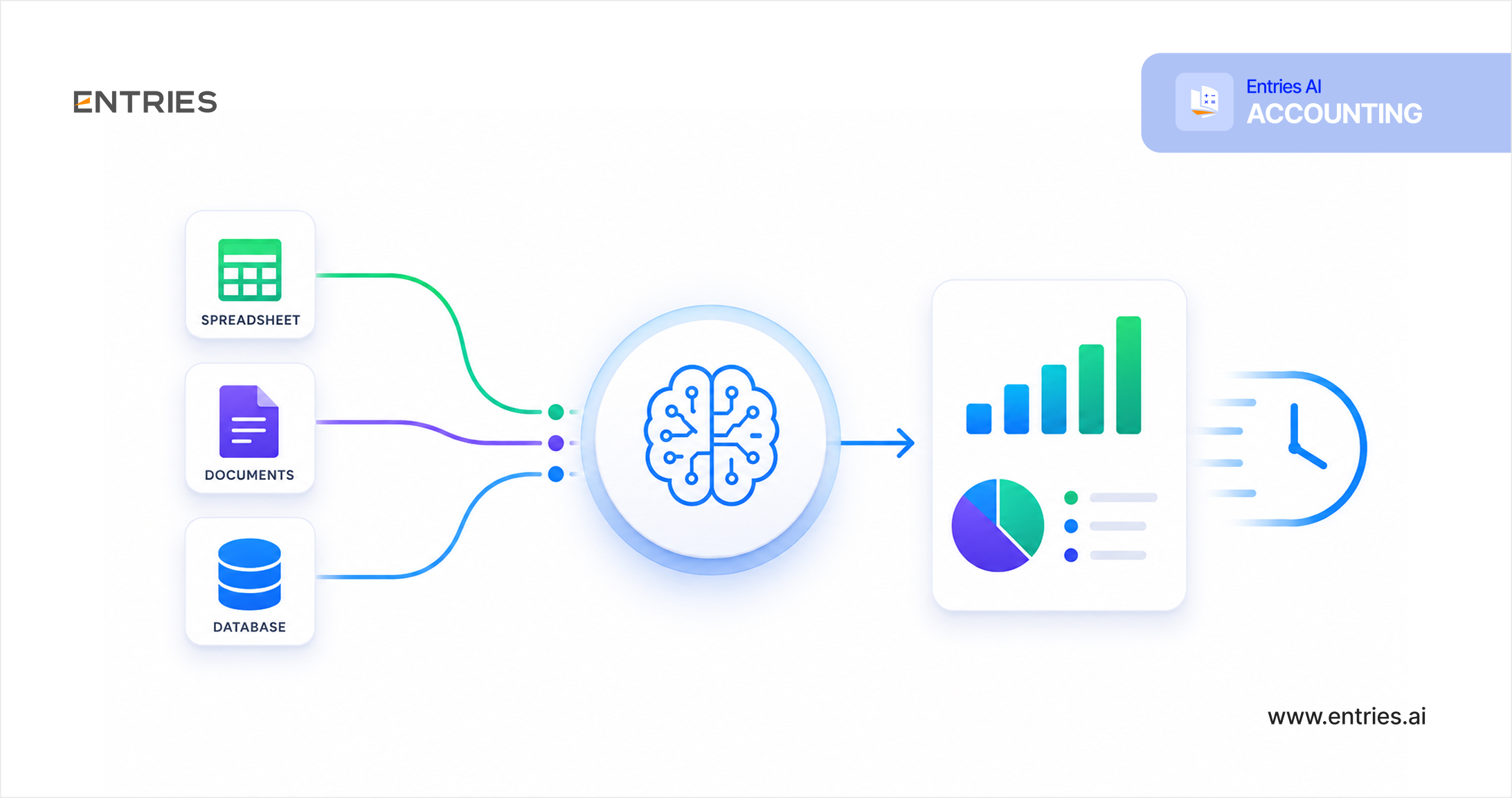
1. Automated Data Flow
AI ensures:
-
Transactions are captured instantly
-
Data flows across systems
No need for manual data collection.
2. Real-Time Report Generation
Reports are:
-
Generated automatically
-
Updated continuously
Always reflect current data.
3. Intelligent Reconciliation
AI:
-
Matches transactions
-
Identifies discrepancies
Reduces manual validation.
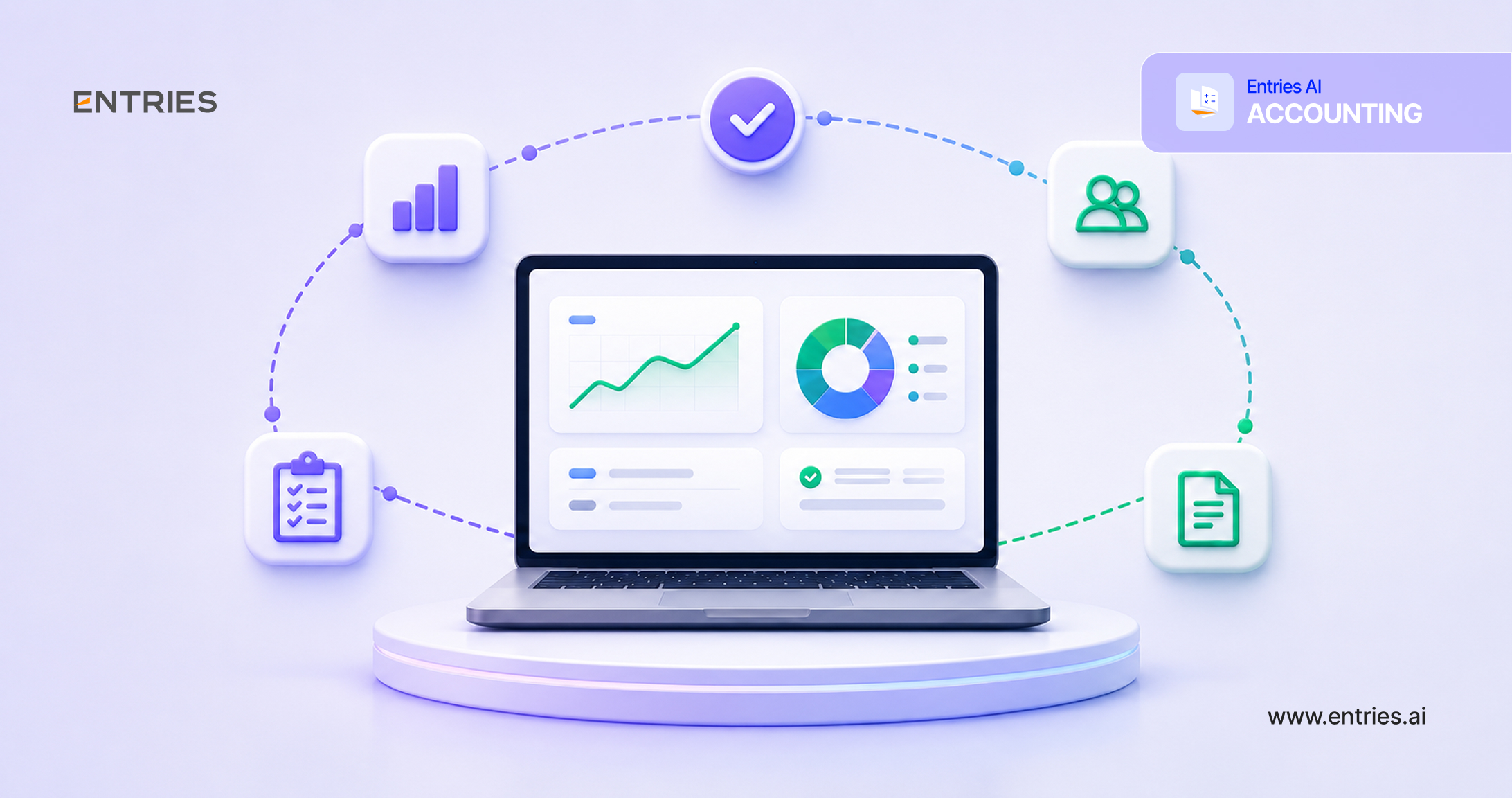
4. Dynamic Dashboards
Instead of static reports:
-
Businesses get live dashboards
Insights are always available.
5. Customizable Reporting
AI allows:
-
Flexible report formats
-
Drill-down capabilities
Better analysis and understanding.
From Static Reports to Live Insights
The shift is fundamental.
Traditional reporting:
-
Static
-
Periodic
-
Manual
AI-driven reporting:
-
Dynamic
-
Real-time
-
Automated
Reporting becomes a continuous process.
Why Automation Alone is Not Enough
Even with reporting tools, businesses face challenges.
1. Data Quality Issues
Reports depend on:
-
Accurate data
-
Consistent inputs
2. Process Gaps
Without proper workflows:
-
Data may be incomplete
-
Reports may be unreliable
3. Execution Challenges
Automation needs:
-
Monitoring
-
Validation
-
Oversight
This is where MSP adds value.
Entriesone: Financial Reporting Automation That Works
Entriesone combines:
1. AI-Native ERP Platform (Entries AI)
All financial data is captured in:
One unified system
Includes:
-
Accounting
-
Payroll
-
Compliance
Eliminates data silos.
2. Real-Time Data Processing
Every transaction:
-
Updates instantly
-
Reflects across reports
Reports are always current.
3. Automated Reporting
Financial statements:
-
Generated automatically
-
Available instantly
No manual preparation required.
4. Managed Services Layer
A team ensures:
-
Data accuracy
-
Process consistency
-
Reliable outputs
Guarantees trust in reports.
5. CFO-Ready Dashboards
Leadership gets:
-
Financial insights
-
Business metrics
-
Decision-ready data
One place of truth.
Real-World Comparison: Before vs After
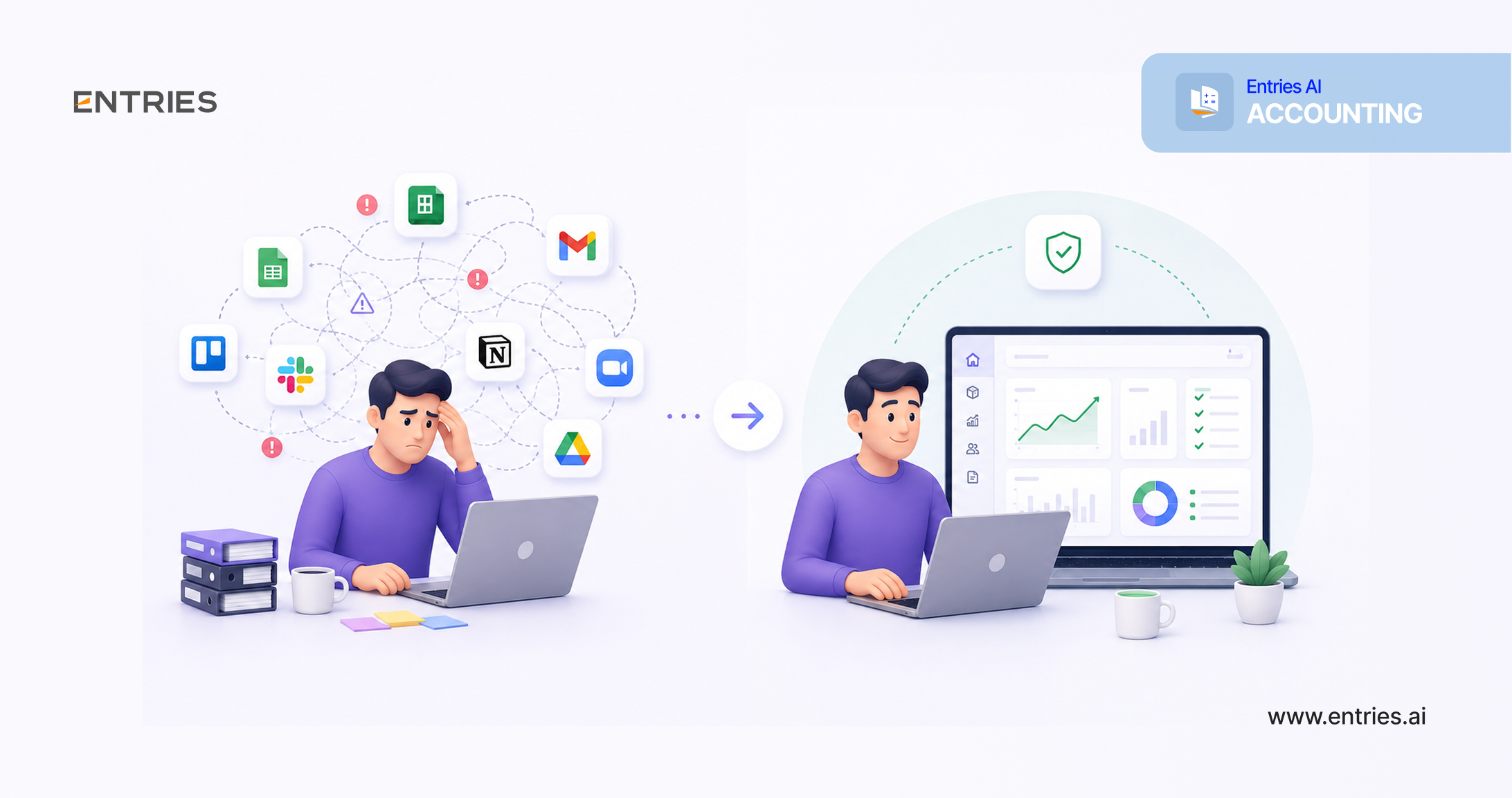
Before (Manual Reporting)
-
Data collected from multiple sources
-
Reports prepared in Excel
-
Delayed availability
-
Frequent errors
After (Entriesone AI Reporting)
-
Unified data
-
Automated reports
-
Real-time insights
-
High accuracy
The difference is speed and reliability.
Business Impact of Reporting Automation
-
Faster Decision-Making
Real-time insights enable quick actions.
-
Improved Accuracy
Automation reduces errors.
-
Increased Efficiency
Less time spent on reporting.
-
Better Strategic Focus
Finance teams focus on insights, not preparation.
-
Scalability
Reporting handles growth effortlessly.
Who Needs Financial Reporting Automation?
This is critical for:
-
Startups scaling rapidly
-
SMBs managing complexity
-
CFOs and finance leaders
-
Multi-entity businesses
If reporting takes too long, automation is essential.
The Future: Real-Time, Always-On Reporting
The future of financial reporting is:
-
Automated
-
Real-time
-
Insight-driven
Businesses will:
-
Stop preparing reports
-
Start consuming insights
Reporting becomes a continuous flow.
Conclusion: From Reporting Delays to Instant Insights
With AI-powered automation:
-
Reports are instant
-
Data is accurate
-
Insights are real-time
The shift is simple:
From:
Manual reporting
To:
Automated, real-time insights
Still spending days preparing financial reports?
It’s time to automate and accelerate
Your AI-powered partner for accounting, payroll, compliance, and reporting.

Nagendra Raju
Co-founder of Entries.AI, leading the charge in building a unified business application that simplifies how SMBs operate today. Instead of juggling multiple-point solutions, SMBs can now rely on a single, seamless system that connects their entire workforce, operations, accounting, and finance functions.