
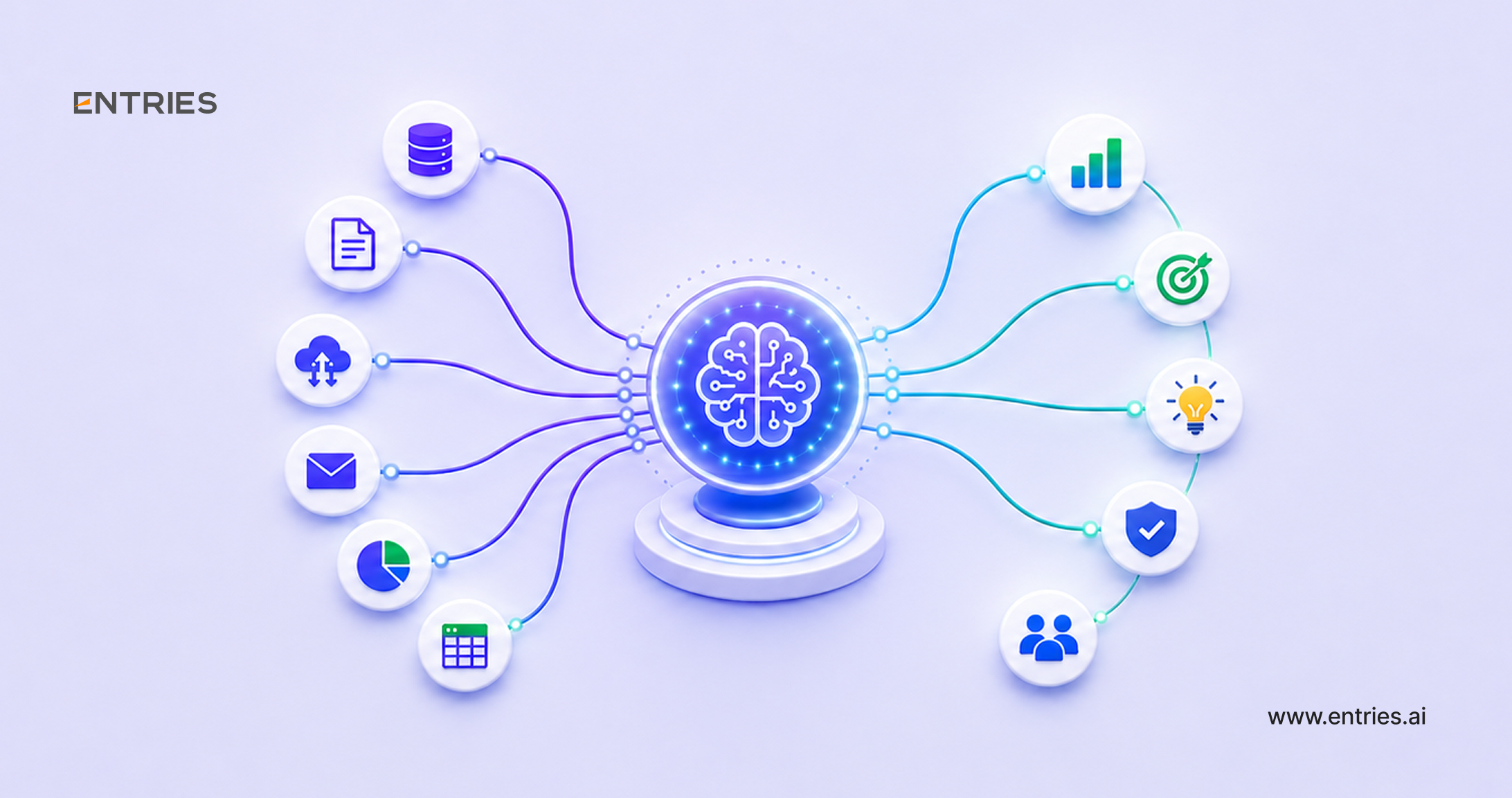
Introduction: The Biggest Risk in Business is Not Lack of Data — It’s Poor Decisions Every business decision carries weight.
Introduction: The Biggest Risk in Business is Not Lack of Data — It’s Poor Decisions
Every business decision carries weight.
Whether it’s:
-
Hiring a new team
-
Expanding into a new market
-
Increasing spend
-
Managing cash flow
The outcome depends on one thing:
The quality of the decision
And the quality of decisions depends on:
The quality of insights
Here’s the paradox.
Most businesses today are not lacking data.
In fact, they have more data than ever:
-
Financial transactions
-
Customer behavior
-
Operational metrics
But despite all this data, decision-making is still:
-
Slow
-
Reactive
-
Uncertain
Why?
Because data alone is not enough.
What businesses need is intelligence
This is where AI-driven decision-making becomes a game changer.
The Traditional Decision-Making Model: Why It Falls Short
Let’s look at how decisions are typically made.
Step 1: Data Collection
Teams gather data from:
-
Accounting systems
-
Reports
-
Spreadsheets
Step 2: Analysis
Finance teams:
-
Clean data
-
Analyze trends
-
Prepare summaries
Step 3: Interpretation
Leadership reviews:
-
Reports
-
Insights
Step 4: Decision
Actions are taken based on:
-
Historical data
-
Assumptions
This process is:
-
Time-consuming
-
Manual
-
Limited
The Core Limitations
1. Decisions Based on Past Data
Traditional models focus on:
What already happened
But business success depends on:
What will happen
2. Delayed Insights
Reports are:
-
Weekly
-
Monthly
Decisions are delayed.
3. Human Bias
Analysis depends on:
-
Individual judgment
-
Limited perspectives
Decisions may not be optimal.
4. Limited Scenario Planning
Teams often evaluate:
-
One or two scenarios
Miss alternative opportunities.
5. Data Overload Without Clarity
Too much data leads to:
-
Confusion
-
Indecision
More data does not equal better decisions.
What is AI-Driven Decision-Making?
AI-driven decision-making uses:
-
Machine learning
-
Data analysis
-
Predictive models
to provide:
Actionable insights in real time
Instead of just showing data, AI:
-
Interprets it
-
Identifies patterns
-
Suggests outcomes
It transforms data into intelligence.
How AI Improves Decision-Making
1. Real-Time Insights
AI systems provide:
-
Live dashboards
-
Continuous updates
Decisions are based on current data, not outdated reports.
2. Predictive Analytics
AI can:
-
Forecast revenue
-
Predict expenses
-
Identify risks
CFOs and founders move from:
Reactive → Proactive
3. Scenario Planning
AI enables:
-
What-if analysis
-
Multiple simulations
Better strategic choices.
4. Pattern Recognition
AI identifies:
-
Trends
-
Anomalies
-
Opportunities
Insights that humans may miss.
5. Faster Decision Cycles
With automated insights:
-
Analysis time reduces
-
Decisions accelerate
Speed becomes a competitive advantage.
From Gut Feel to Data-Driven Decisions
Traditionally, many decisions relied on:
-
Experience
-
Intuition
-
Gut feeling
While valuable, this approach has limitations.
AI enhances decision-making by:
-
Validating intuition with data
-
Providing evidence-backed insights
The best decisions combine:
Human judgment + AI intelligence
Why AI Alone is Not Enough
Here’s an important reality:
AI provides insights, but it doesn’t execute decisions.
Businesses still need:
-
Context
-
Expertise
-
Execution capability
Without proper execution:
-
Insights remain unused
-
Opportunities are lost
This is where MSP plays a critical role.
AI + MSP: The Complete Decision Engine
The most effective model combines:
AI systems
Managed services
AI provides:
-
Data processing
-
Insights
-
Predictions
MSP provides:
-
Execution
-
Expertise
-
Continuous monitoring
Together:
They create a complete decision-making ecosystem
Entriesone: AI-Powered Decision Intelligence in Action
Entriesone brings decision-making to life by combining:
1. AI-Native ERP Platform (Entries AI)
All business data is captured in:
One unified system
Includes:
-
Accounting
-
Payroll
-
Compliance
-
Operations
Creates a strong data foundation.
2. Real-Time Dashboards
Founders and CFOs get:
-
Live financial data
-
Business performance insights
Instant visibility.
3. Predictive Analytics
AI enables:
-
Forecasting
-
Trend analysis
-
Risk detection
Better planning and strategy.
4. Managed Advisory Layer
A team that:
-
Interprets insights
-
Recommends actions
-
Supports execution
Ensures decisions are implemented effectively.
This creates:
One platform + AI intelligence + execution support
Real-World Example: Traditional vs AI Decision-Making
Traditional Approach
-
Monthly reports
-
Manual analysis
-
Reactive decisions
AI-Driven Approach (Entriesone)
-
Real-time insights
-
Predictive analytics
-
Faster decisions
The difference is clarity and speed.
Business Impact of AI Decision-Making
1. Faster Growth
Quick decisions drive momentum.
2. Better Financial Control
Visibility improves cost management.
3. Reduced Risk
Early detection prevents issues.
4. Increased Profitability
Optimized decisions improve margins.
5. Competitive Advantage
Businesses move faster than competitors.
Who Benefits Most from AI Decision-Making?
This is critical for:
-
Founders
-
CFOs
-
Finance teams
-
Growing businesses
If decisions matter, AI matters.
The Future: Autonomous Decision Systems
The next phase of business operations will be:
-
AI-driven
-
Real-time
-
Autonomous
Systems will:
-
Suggest actions
-
Highlight opportunities
-
Identify risks instantly
Decision-making will become:
Faster, smarter, and more precise
Conclusion: Better Decisions Drive Better Businesses
At the end of the day, business success depends on decisions.
AI transforms decision-making by:
-
Providing real-time insights
-
Enabling predictive analysis
-
Supporting strategic thinking
The shift is simple:
From:
Data
To:
Intelligence
And when combined with execution:
It becomes a powerful growth engine.
Still relying on outdated reports and gut decisions?
It’s time to make smarter, faster decisions
Your AI-powered partner for accounting, payroll, compliance, and business intelligence.
Run your business with a connected view.
Explore accounting, HRMS, inventory and compliance in one platform.
Book a free demo ↗